The fourth single source of truth
Power BI already contains much of the business meaning AI needs. The hard part is deciding which meaning deserves to be reused.
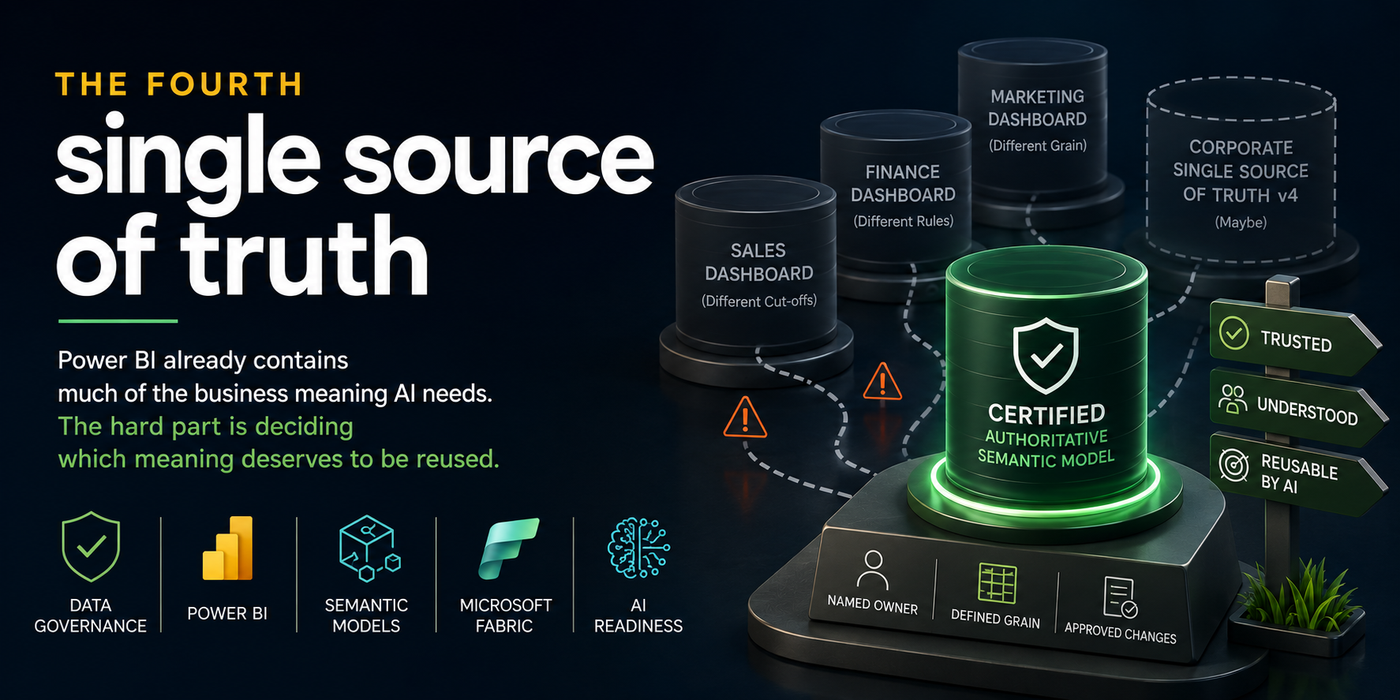
Most Power BI estates already have a semantic layer. Usually several.
Two dashboards use the same measure name, but their cut-offs differ. Somewhere nearby there is a model called Corporate Single Source of Truth v4.
Microsoft’s article, The AI Semantic Layer You Probably Already Have, makes a sensible case. Power BI semantic models already hold measures and relationships. They also carry business-friendly labels. Fabric IQ can reuse that meaning to ground Copilot and agents without forcing every model through a rebuild first. The IQ workload is still in preview, which gives teams a useful chance to settle the authority question before agents start answering from production definitions.
That could save a lot of pointless engineering. Then you have to decide which model is allowed to speak for the business.
AI will reuse the disagreement
People have learned to live with conflicting dashboards - they know the exclusions differ and one version waits for the morning refresh. Some of that knowledge is written down. Much of it lives in the sentence, “Ask the financial controller before you use that number.”
An AI answer can hide the disagreement rather well. It returns the definition embedded in whichever model you have allowed it to use, wrapped in polished prose and confidence. The user sees one answer. The argument between the models has disappeared from view.
A confident WRONG answer is worse than two dashboards that visibly disagree. At least the dashboards make somebody ask a question...
Using a semantic model for AI grants authority to whatever it contains. Reuse does not establish that authority. Neither does a certification badge added by the team that built the model.
Who owns the definition? At what grain is it valid? When was it last reviewed?
Certification needs a human name
Semantic-model governance often stops at a technical checklist. The refresh works and row-level security is present, and somebody has even filled in the description field as well. Those checks matter, and business acceptance remains a separate test.
A governed model needs a named business owner who will defend its definitions. Its grain must be explicit. The decisions it supports should be visible, along with the places where it should not be used. Changes to important measures need an approval trail that people can actually follow.
This sounds boring because it is boring. It is also the work that stops self-service becoming self-disagreement.
Technical controls can help people find the model and catch broken calculations. Authority still comes from an owner accepting the business definition and the consequences of changing it.
Nobody can delegate that acceptance to a tooltip. Nobody.
Start with one disputed decision
I would not begin by declaring every semantic model an enterprise asset. That just ends up as six months of meetings about naming standards and arguments about how a business KPI should be measured.
Pick one decision where conflicting definitions already waste time. Find the models that answer it, compare the rules and agree which definition serves that decision. Name the owner. Certify the model that carries the accepted definition, then mark the others clearly or retire them.
Now AI has something worth reusing. So do report authors.
Microsoft is right that a great deal of semantic work already exists inside Power BI. The governance work begins when we decide which parts are authoritative and remove the ambiguity around the rest.
Before connecting an agent, make Single Source of Truth v4 earn the name by retiring or clearly marking the competing models. Until that happens, the filename is doing quite a lot of work.